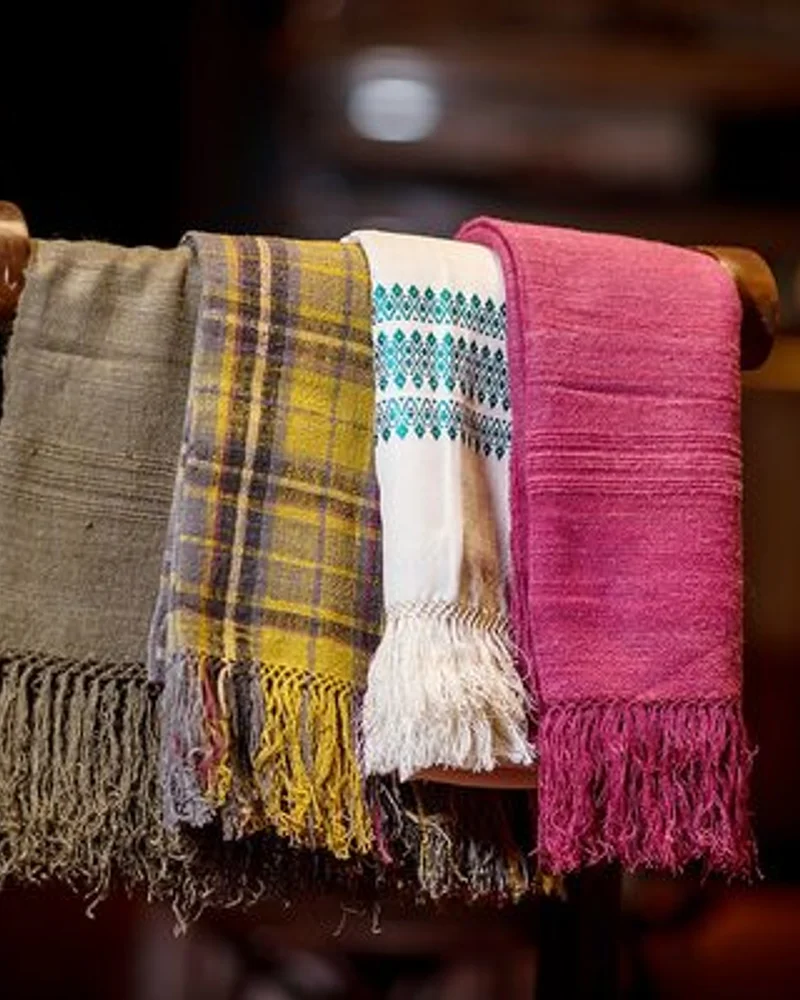
Famous handloom clusters in India
Every region has its own weave. Choose one or two clusters to start rather than trying to stock the whole country.
- Pochampally, Telangana: known for ikat sarees, dupattas and fabric
- Bhagalpur, Bihar: famous for tussar silk and cotton-silk stoles and sarees
- Kutch, Gujarat: handwoven shawls, stoles and rich embroidery and craft traditions
- Varanasi, Uttar Pradesh: Banarasi silk and brocade
- Chanderi and Maheshwar, Madhya Pradesh: light cotton-silk sarees and dupattas
- West Bengal clusters such as Shantipur, Phulia and Dhaniakhali: cotton tant sarees
- Kanchipuram and other Tamil Nadu clusters: silk sarees
- Assam and the North East: muga, eri and cotton weaves
Emporiums, cooperatives and craft melas
If you cannot travel to clusters, state handloom emporiums and weaver cooperatives are a reliable place to start. Many states run their own handloom stores and cooperative societies, and some sell at bulk rates to resellers if you ask.
Craft melas and exhibitions bring weavers from across India to one place. Dastkar bazaars, Dilli Haat, state handloom expos and government-supported craft fairs are good places to meet weavers directly, see quality in person and collect phone numbers for future orders.
Online B2B platforms such as IndiaMART also list handloom suppliers. Use them to discover options, but verify carefully, because powerloom imitations are often sold as handloom.
Buying small when you cannot meet the MOQ
Individual weavers often sell small quantities, sometimes even single pieces, which suits a new seller. Cooperatives and traders may ask for larger lots.
Ask for a mixed bundle of colours instead of many pieces of one design. Team up with another handloom seller and split a lot. Order samples first and pay a little extra if needed. Once a weaver trusts you, many are happy to send small repeat orders over WhatsApp.
Checking quality and spotting imitations
If a supplier refuses to tell you where a piece was woven, treat that as a warning sign.
- Look at the reverse side: handloom usually shows small irregularities and a less perfect finish than machine-made cloth
- Check the border and pallu join, and look for loose threads
- Ask the fibre composition. Pure cotton, silk-cotton and pure silk are priced very differently
- Do a small colour test on a sample to check bleeding, especially with natural dyes
- Ask for a live video of the actual piece, not a catalogue image
Avoiding scams, negotiating and managing stock
Pay a small advance for the first order rather than the full amount, especially for online suppliers you have never met. Check GSTIN details on the GST portal if shared, and prefer suppliers with a physical address or a mela stall you visited.
Negotiate respectfully. Weavers often work on thin margins, and squeezing them too hard can mean lower quality next time. Ask for better rates on regular orders rather than bargaining on every piece. Fair buying also gives you an honest story to tell your customers.
Handloom does not go out of fashion quickly, but it can be damaged by damp and moths. Store pieces folded in cotton covers, refold silk occasionally, and keep a record of each piece's source and cost so you can reorder your bestsellers.