ShopShare

How to Price Bags and Footwear: Costs and Margins

Bags and footwear are bulky to ship and footwear comes with size risk, so pricing needs more care than it seems. Here is how to find your true cost, set a fair price and protect your margin on delivery.

Updated 25 October 2026 · ShopShare Guides

Bags & Footwear business from home
Quick answer

Price bags and footwear by adding your full landed cost: wholesale rate, transport, dust bag or box, packing and an allowance for damaged or unsold pieces. Many resellers then price bags at roughly one and a half to two times landed cost (approximate), and footwear a little higher to cover size returns and unsold sizes. Compare local prices before finalising.

Work out your true cost per piece

Add every cost involved in getting one item to the buyer. Below is an example only for a PU sling bag. Your numbers will be different.

  • Wholesale price: ₹320
  • Transport from supplier, shared across the lot: ₹25
  • Dust bag and courier bag: ₹20
  • Allowance for damaged or unsold pieces: ₹25
  • Total landed cost: ₹390

Set your selling price

If you sell this sling bag at ₹699, you keep about ₹309 per bag before your own time and phone costs. Many resellers aim for roughly one and a half to two times landed cost on bags, but this varies a lot by design, city and competition. Treat it as a starting point.

Footwear usually needs a bigger cushion than bags, because some sizes in every set sell slowly and exchanges cost you courier charges both ways. Build that risk into your price instead of being surprised later.

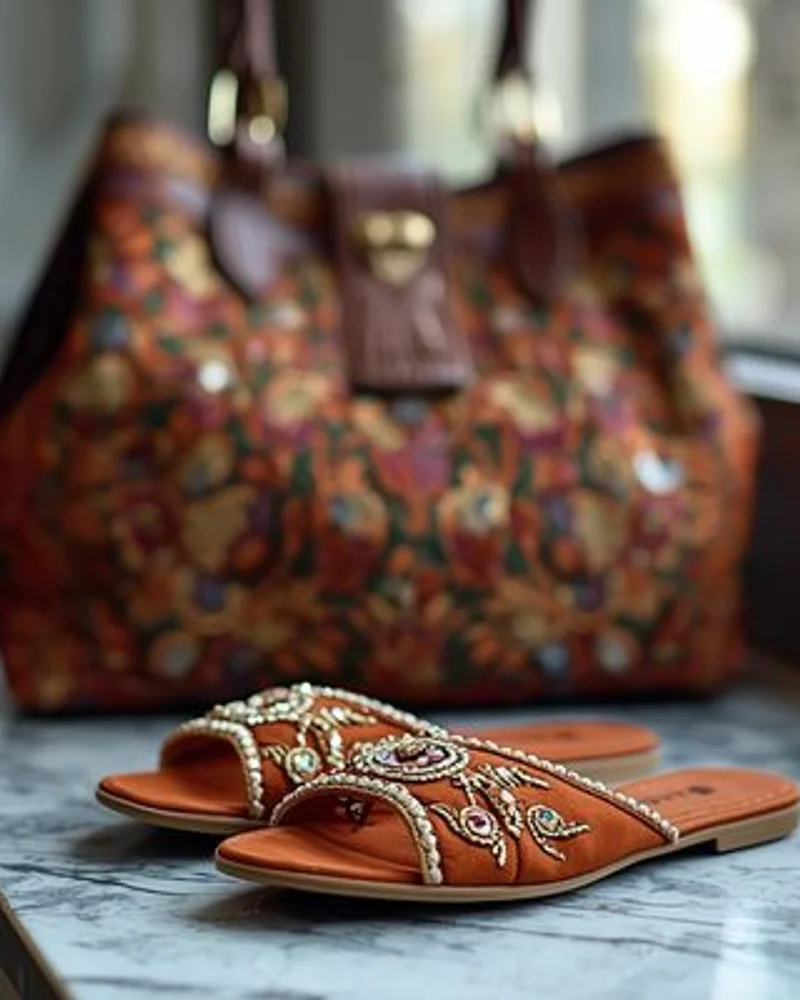
Party clutches, potli bags and wedding footwear can often carry higher margins because buyers pay for the look. Basic backpacks and daily slippers are easy to compare online, so keep those competitive.

Pricing ideas that work

  • Matching sets: a clutch and sandals for a wedding look at a combo price
  • Bag plus wallet or pouch bundles for gifting
  • Colour bundles: two slings in different colours at a small discount
  • MRP and offer price: show the MRP and your offer price so buyers see the percentage off, but keep MRP honest
  • Price ladders: keep a budget range, a mid range and a few premium pieces so every buyer finds something

Festive pricing and delivery charges

Demand for clutches, potlis and ethnic footwear rises in the wedding season and before Diwali, Eid, Karwa Chauth and Raksha Bandhan. Bags are also a common gift on birthdays and Mother's Day. Stock early and hold your price on festive pieces; use combos instead of deep discounts.

Delivery is a big part of your cost. A structured bag or a shoe box is bulky, and couriers often charge on volume as well as weight. Pack one item and check real rates before quoting. Many sellers charge a flat delivery fee or offer free delivery above an order value. If you offer cash on delivery, be clear whether it has an extra charge, and think about asking for a small advance on footwear to cover return courier costs.

When to raise your prices

Review prices when supplier rates go up, when a style sells out fast every time, or when you have improved your packaging and photos. Change prices on new stock rather than on items a buyer is already discussing.

Give regular buyers a heads-up and a short window at the old price. Honest, steady pricing builds the trust that brings people back for their next bag or pair.

Get the free ShopShare app

Open your shop in a minute, show up for buyers near you on ShopShare Market and Google, and take orders on WhatsApp. No commission, ever.

Or see bags & footwear sellers near you →

Questions

What is the profit margin on handbags?

It varies with design, material and competition. Fashion and party bags often allow more margin than basic bags. Calculate your full landed cost first and price above it with a clear cushion.

Why should footwear be priced with a bigger margin?

Footwear has size risk and more exchanges. Some sizes sell slowly and return courier costs add up, so your margin needs to cover that.

How much should I charge for delivery of bags?

Pack an item, weigh it and check courier rates for your usual destinations. Then set a flat fee or free delivery above an order value that still covers your cost.

Should I offer cash on delivery for footwear?

You can, but returns cost more with COD. Some sellers take a small advance for footwear to cover courier charges if the order is refused.

How do I calculate the selling price of a handbag?

Add the wholesale price, your share of transport, the dust bag and courier bag, and an allowance for damaged or unsold pieces to get landed cost. Apply a markup that suits the design, often around one and a half to two times for resellers (approximate). Then compare with similar bags locally and online before you finalise.

Should I sell bags cheaper than Meesho or Amazon?

Not necessarily. Large platforms run deep sales you cannot match on every item. Compete on what you do better: honest photos and measurements, quick local delivery, personal styling help and easy exchanges. Keep everyday basics near market price and earn your margin on well chosen occasion pieces and combos.

Do combo offers work for bags and footwear?

Yes, combos often work well because they raise the order value without a deep discount. Examples include a clutch with matching sandals for weddings, a bag with a wallet for gifting, or two slings in different colours. Price the combo so it still covers the full landed cost of both items with a fair margin.

More for your bags & footwear

ShopShare Free shop app · orders on WhatsAppDownload