Step by step
- Ask about upcoming poojasTell family, friends and neighbours that you sell pooja items and kits, and ask which pooja or festival they are preparing for.
- Check the festival calendarFestival dates move each year, so check the current calendar and plan stock and posts a few weeks ahead.
- Post kits early on StatusTwo to three weeks before a festival, post the full kit with every item listed, plus one decorated item daily.
- Give clear order-by datesShare a countdown with the last date for delivery orders so buyers order in time.
- Share in groups and on InstagramPost occasional festive messages in community and temple groups where selling is allowed, and reels of painting diyas or packing kits.
- Get found locallyMake sure nearby buyers can find you through local listings and a free Google Business Profile.
- Offer monthly essentialsBetween festivals, offer a monthly pack of agarbatti, camphor, wicks and kumkum to regular buyers.
- Remind past buyersNote what each buyer ordered and remind them before the same festival next year.
Begin with family, friends and neighbours
Tell people you know that you sell pooja items and ready kits, and ask which pooja or festival they are preparing for next. A direct, helpful question often leads to an order.
Families living away from their hometowns, newly married couples and busy working families are often grateful for a seller who explains what is needed and puts it all in one box.
WhatsApp Status around festivals
Status works very well for pooja items because festivals give you a natural reason to post. A simple routine:
- Two to three weeks before a festival: post the full kit and what is inside
- Daily: one decorated item, such as a thali or a diya set, with price
- A short note on what a particular pooja needs, kept simple and respectful
- A countdown with an order-by date for delivery
- Between festivals: daily essentials and monthly packs
Groups, Instagram and local listings
Society, community and temple groups often welcome a useful festive post, as long as selling is allowed. Share before major festivals, not every day.
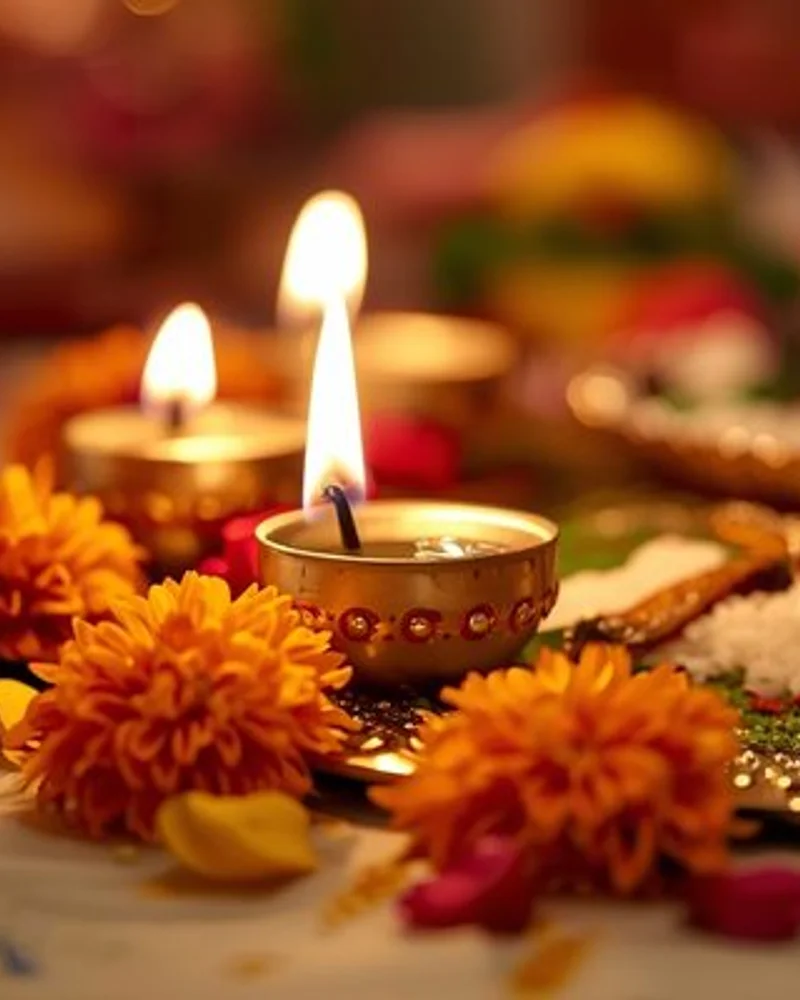
On Instagram, reels of painting diyas, decorating a thali or packing a kit show your care and craft. Festive colours and lamps photograph beautifully. Keep your shop link in your bio. With ShopShare, you can share each product to WhatsApp Status, Instagram or Facebook in a tap.
Your shop also appears on ShopShare Market, where nearby buyers see the closest sellers first. A Google Business Profile helps people searching for a pooja store near them find you.
Your pooja and festival calendar
Festival dates move each year, so check the current year's calendar and plan stock and posts a few weeks ahead.
- Diwali and Dhanteras: diyas, Lakshmi pooja kits, torans, rangoli and brass items
- Ganesh Chaturthi: idols, especially eco-friendly ones, and pooja kits
- Navratri and Durga Puja: kalash sets, chunri, thalis and decorations
- Rakhi: decorated rakhi thalis
- Karva Chauth: decorated karva and thali sets
- Janmashtami: decorations and pooja items
- Housewarmings, weddings and naming ceremonies: complete pooja kits all year
Word of mouth and repeat buyers
Pooja buying repeats every festival and every month. Keep a note of what each buyer ordered and remind them before the same festival next year. Track each WhatsApp enquiry as new, paid or delivered, especially during the festival rush when messages pile up.
Offer a monthly essentials pack for regular buyers. After a festival, thank buyers and ask for a photo of their pooja setup or a short review you can share with permission.
Photos that sell pooja items
Use a clean cloth, such as red or yellow, as a background, with good daylight. Show the full kit laid out with every item visible, then the packed box. For diyas, add one photo lit up in the evening. Keep photos respectful and uncluttered.