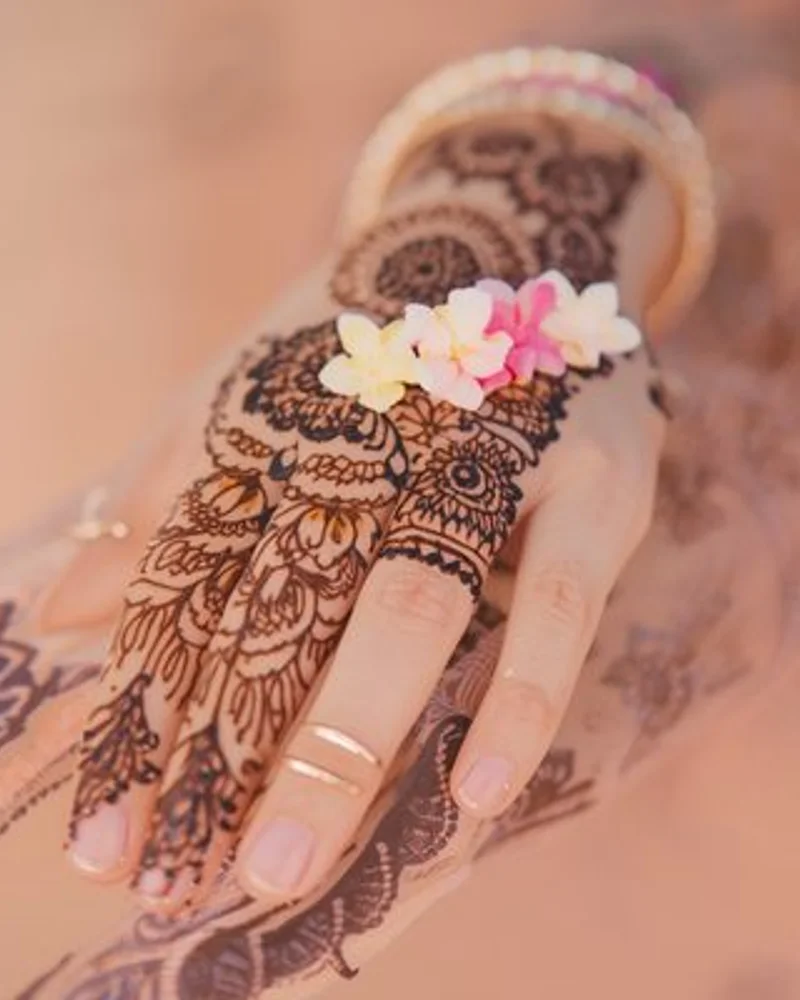
Step by step
- Practise your designsPractise daily on sheets and your own hands until your lines are neat, and learn a few styles like Arabic and traditional.
- Buy a safe basic kitBuy natural henna powder or trusted cones, cone sheets, oil, lemon-sugar mix and cotton, avoiding any black henna.
- Build a portfolioDo free or low-cost designs for 3 to 5 friends and photograph both the fresh design and the next-day stain.
- Set your packagesCreate a short menu, such as party, festive, full hands, bridal and kids, each with a starting price.
- Check the legal basicsMost artists start as individuals; check the current GST threshold for services on the GST portal or with a CA.
- Get onlinePut your packages and photos on one shareable link and on Instagram so clients can see your work.
- Share with your contactsSend your link to friends, relatives and local groups where allowed, and post your work daily on WhatsApp Status.
- Collect stain photos and reviewsAsk every client for a next-day stain photo and a short review to grow your portfolio.
Is a mehendi business right for you?
Mehendi suits you if you enjoy drawing, have patience for long sittings and do not mind working evenings, weekends and festival days, which is when demand is highest. Bridal work can take several hours for one client.
You need practice before you charge. Many artists learn from a local course or online tutorials, then practise on paper, their own hands and family members for weeks. Build a set of designs you can draw confidently: Arabic, Indian traditional, Indo-Arabic and minimal modern styles.
What you need and approximate starting budget
Your main costs are henna powder or ready cones, cone-making supplies, aftercare items and a way to take good photos. These figures are approximate and only for planning.
- Basic kit (approximate): ₹1,500 to ₹4,000 for natural henna powder or cones, cone sheets, essential oil, lemon-sugar mix, cotton, tissues and sanitiser
- Practice and design material (approximate): ₹300 to ₹1,000 for practice sheets and design books
- Photos and travel (approximate): ₹1,000 to ₹3,000 for a phone stand or small ring light and a carry bag for home visits
Legal basics to check
Most home mehendi artists start as individuals offering a service. Rules change and differ by state, so confirm with a CA or the official portals.
GST is generally needed only when your yearly turnover crosses the threshold for services, which is different from the one for goods. Check the current limit on the GST portal. Free Udyam (MSME) registration may help later.
If you plan to make and sell your own henna cones as a product, cosmetic rules may apply, so check before selling cones to others. Whatever you use on skin, use only natural henna and never chemical 'black henna'. Keep a simple record of what you use.
Choose your style and first packages
Decide who you want to serve: brides, wedding guests, festival clients, or kids and quick party designs. Start with a few clear packages so clients do not have to negotiate every detail. A sample first menu:
- Simple party mehendi, one side of the hand
- Festive mehendi, both sides of both hands up to the wrist
- Full hands up to the elbow for close family of the bride
- Bridal hands and feet, with a trial session option
- Kids' mini designs at birthday parties and functions
- Group booking for sangeet or mehendi night guests
- Karwa Chauth and Teej festival slots at your home
- Eid night slots for quick Arabic designs
- Name or portrait add-ons in bridal designs
- Touch-up or aftercare kit to take home
Name your business and get online
Choose a name people remember, often with your own name, like 'Henna by Farah' or 'Riya Mehendi Art Nagpur'. Check Instagram and Google so it is not already taken.
Put your packages online with photos of your work and starting prices. On ShopShare you can open a free shop in under a minute and get a link like yourname.shopshare.in, where each package is listed and clients tap 'Order on WhatsApp' to book. Payments come straight to you by UPI or cash, with no commission.
Your first week plan
- Day 1: Prepare fresh cones and do a patch-safe practice on your own hand
- Day 2: Do free or low-cost designs for 3 to 5 friends and photograph each in daylight
- Day 3: Photograph the dark stain the next day as well, since clients want to see results
- Day 4: List your packages with photos and share the link with family and friends
- Day 5: Post your work on WhatsApp Status and Instagram
- Day 6: Take your first paid bookings and confirm date, time, address and number of hands
- Day 7: Ask clients for a stain photo and a short review